Justice Department Starts Telling Counties Where It Plans to Send Election Monitors
Counties in at least five states have been notified, but the department has not said how many jurisdictions it will monitor, and one local clerk questions why his county was chosen.
By Kendra Konchanuk ·
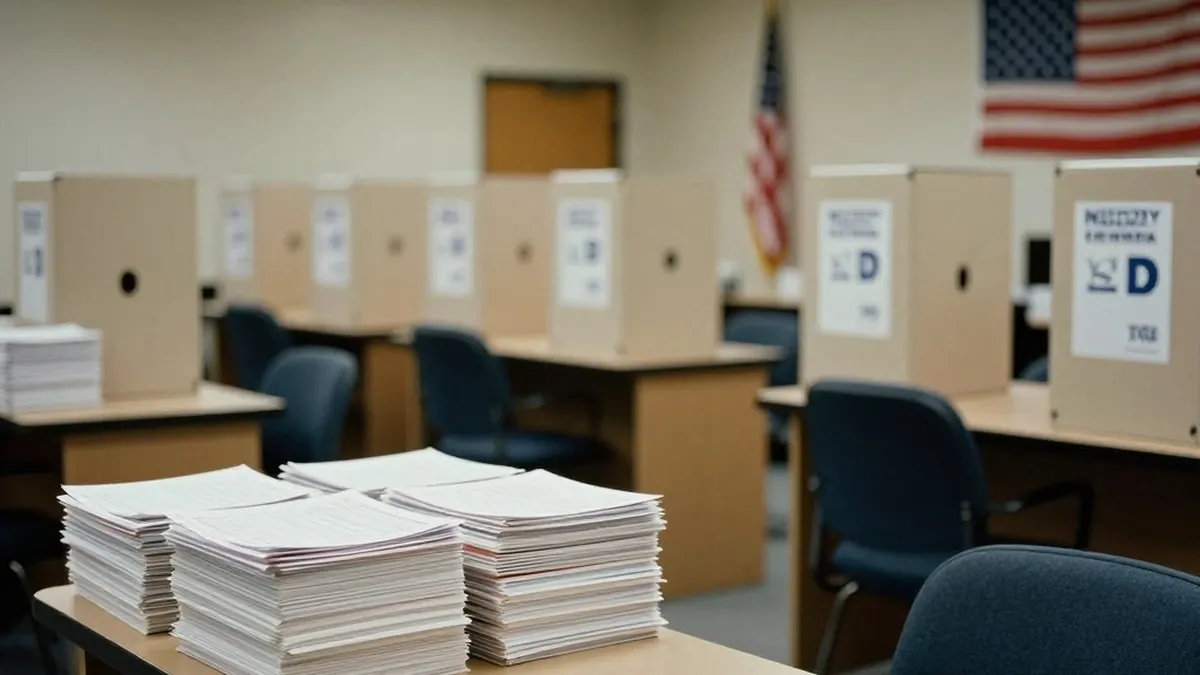
The Justice Department this week began notifying counties where it intends to monitor voting on Election Day, according to NPR. Counties in Colorado, Florida, Minnesota, Texas and Washington have been contacted so far, and the list appears to be expanding.
The department has long sent monitors to check compliance with voting laws. This year, however, the Trump administration's unprecedented efforts to take more control of elections from state and local governments have raised fresh concerns about that work. At least one county official has already questioned why his locality was selected.
Last month, Harmeet Dhillon, who leads the department's Civil Rights Division, said the DOJ planned to deploy 1,000 observers nationwide, calling it "the largest monitoring effort" in the department's history. It remains unclear which jurisdictions, or how many, will be covered. DOJ spokesperson Kiersten Pels told NPR those details will be released "closer to the election." By comparison, the department under President Biden monitored 64 jurisdictions in 24 states on Election Day in 2022, the last midterm year.
Many local officials and experts see this year as different. President Trump continues to falsely claim he won the 2020 election and that fraud is more widespread than has ever been proven. Experts worry federal law enforcement could use those claims, or new ones, as a pretext to seize ballots during counting or otherwise interfere with the process.
Most states reported no problems with DOJ monitors during this year's primaries. In Wyoming, though, the Republican governor voiced concern about "aggressive" and "irregular" behavior by monitors during the August primary, and the Republican clerk of Laramie County told NBC News their conduct "showed complete disregard for our state laws and administration of our elections." Pels said the department disagrees with that description of the two monitors it sent, adding that Dhillon later met with Wyoming officials.
Notification procedures have also changed. In past cycles, state officials were told at the same time as counties. This year that did not initially happen, according to officials in three states who spoke to NPR anonymously because they were not authorized to speak publicly. States scrambled to learn where the DOJ planned to be after notices began going out Tuesday, and several said they received notification only after NPR asked the department about it.
In Adams County, Colorado, Democratic clerk Josh Zygielbaum said he was not surprised by the selection, since the county includes part of the state's competitive 8th Congressional District, which could help decide control of the House. He was surprised that the DOJ contacted only him and not the Republican clerk in neighboring Weld County, which also holds a large part of the district. "My initial thought is that it's politically motivated, and that this is potentially an intimidation technique," he said.
Pels said the department prioritizes places with competitive elections and chose Adams County because it is covered by Section 203 of the Voting Rights Act, which requires access to election materials in voters' languages. Weld County is not covered. Zygielbaum was not reassured, saying it "still doesn't put me at ease that it's not a targeted visit." Colorado rules require observers to have the secretary of state's permission unless a court orders otherwise, and a spokesperson said the state is weighing the request with the Attorney General's Office. Zygielbaum has asked for a state staffer to be present in Adams County to watch any federal monitors.
NPR also confirmed notices to seven Texas counties, King County in Washington, Miami-Dade County in Florida, and Hennepin and Ramsey counties in Minnesota. Monitors were denied close access to polling places in the two Minnesota counties during the August primary, and state officials say it is too early to say whether the fall decision will differ. In 2024, Texas Attorney General Ken Paxton, now the Republican nominee for U.S. Senate, went to court to keep Biden-era DOJ monitors out of polling and counting sites.
Source: Houston Public Media